Teach discursive writing and balanced argument skills through a thought-provoking environmental debate.
This resource teaches students how to discuss real-world issues fairly, consider different viewpoints and reach a balanced conclusion.
Students join Jamie Foxley and his panel on Fox for Thought, a written chat-show style discussion exploring the question:
Should all trees in Great Britain be protected?
The discussion presents different viewpoints about conservation, development, safety and the role of trees in our environment. Students are encouraged to examine perspectives, weigh up arguments and develop their own informed opinions.
The pack guides students through the process of writing a balanced discursive essay, moving from reading and analysing viewpoints to planning and producing their own independent writing. Students develop their ability to structure arguments, use evidence and examples effectively, and build paragraphs using clear reasoning.
Students are also supported in writing clear PEEL-style paragraphs, using points, evidence, explanation and links to build balanced arguments.
This resource includes:
A realistic chat-show style discussion text
Reading comprehension questions
Speaking and listening activities
Tasks exploring arguments for and against
Planning frameworks for a discursive essay
A model discursive essay
Skills covered:
Suitable for KS3 English (ages 11–14) and useful preparation for GCSE-style writing skills (ages 14–16), this resource helps students explore a genuine debate while developing their ability to write balanced, well-structured discussions.
Although the debate focuses on tree protection in Great Britain, the discussion structure, arguments and model essay can easily be adapted for students to explore similar environmental issues in their own country or local area.
Teach discursive writing and balanced argument skills through a thought-provoking environmental debate.
This resource teaches students how to discuss real-world issues fairly, consider different viewpoints and reach a balanced conclusion.
Students join Jamie Foxley and his panel on Fox for Thought, a written chat-show style discussion exploring the question:
Should all trees in Great Britain be protected?
The discussion presents different viewpoints about conservation, development, safety and the role of trees in our environment. Students are encouraged to examine perspectives, weigh up arguments and develop their own informed opinions.
The pack guides students through the process of writing a balanced discursive essay, moving from reading and analysing viewpoints to planning and producing their own independent writing. Students develop their ability to structure arguments, use evidence and examples effectively, and build paragraphs using clear reasoning.
Students are also supported in writing clear PEEL-style paragraphs, using points, evidence, explanation and links to build balanced arguments.
This resource includes:
A realistic chat-show style discussion text
Reading comprehension questions
Speaking and listening activities
Tasks exploring arguments for and against
Planning frameworks for a discursive essay
A model discursive essay
Skills covered:
Suitable for KS3 English (ages 11–14) and useful preparation for GCSE-style writing skills (ages 14–16), this resource helps students explore a genuine debate while developing their ability to write balanced, well-structured discussions.
Although the debate focuses on tree protection in Great Britain, the discussion structure, arguments and model essay can easily be adapted for students to explore similar environmental issues in their own country or local area.

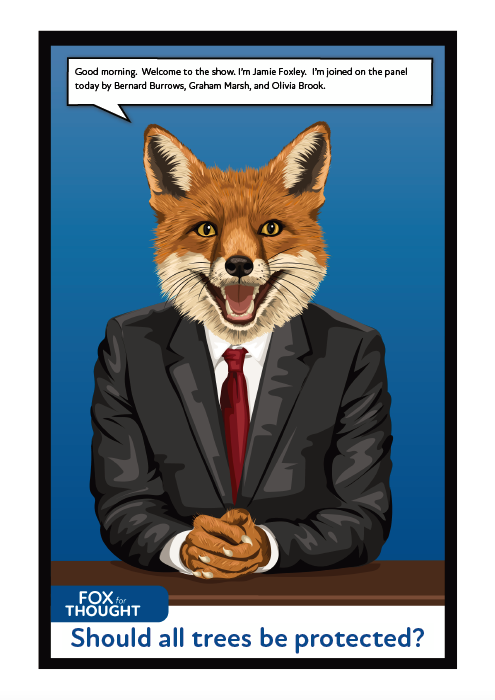 Image 1 of 10
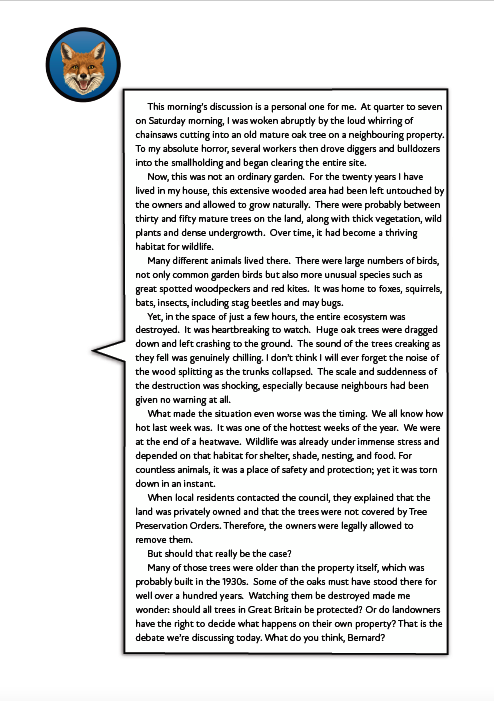 Image 2 of 10
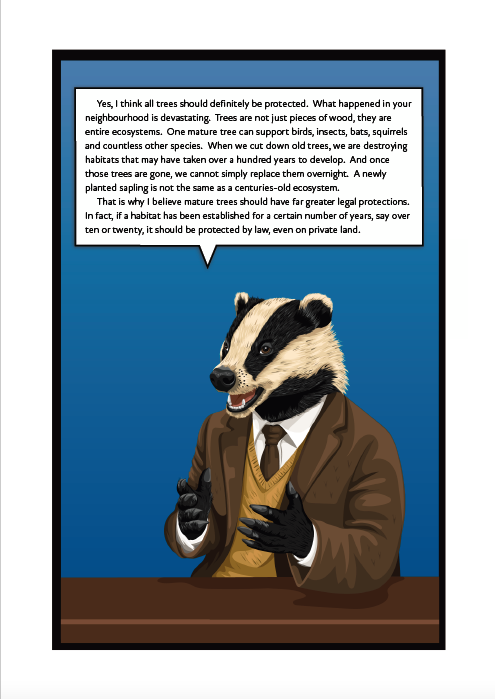 Image 3 of 10
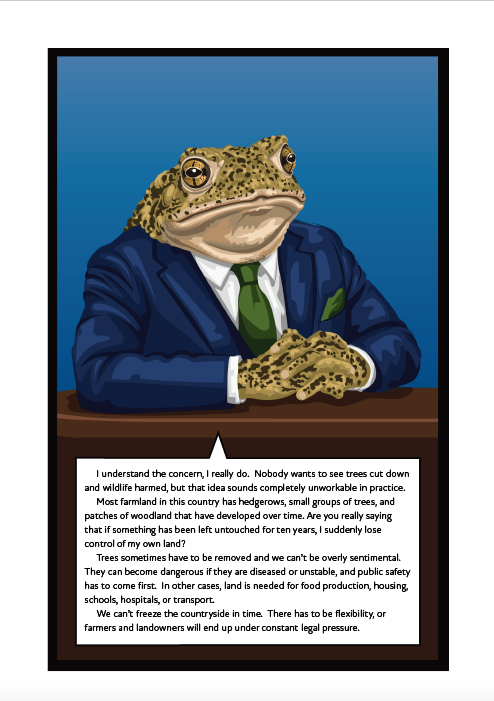 Image 4 of 10
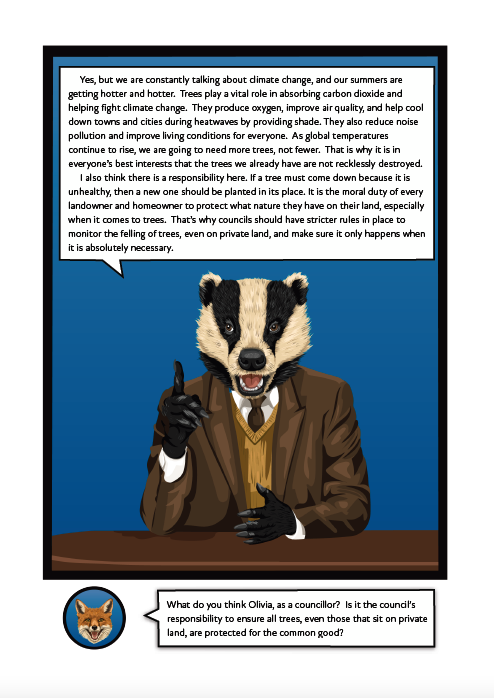 Image 5 of 10
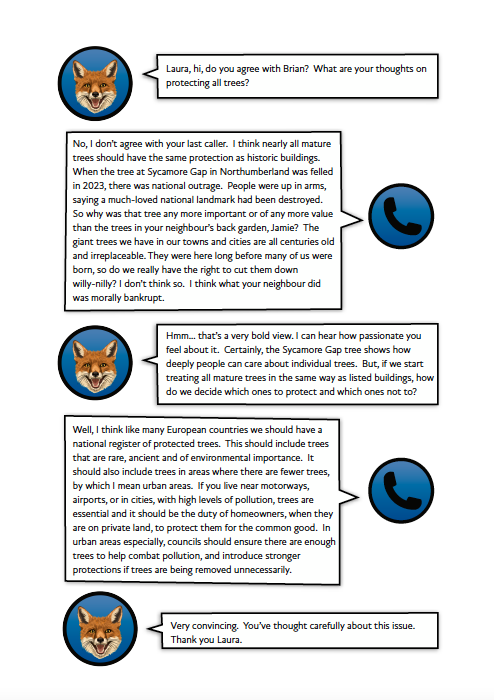 Image 6 of 10
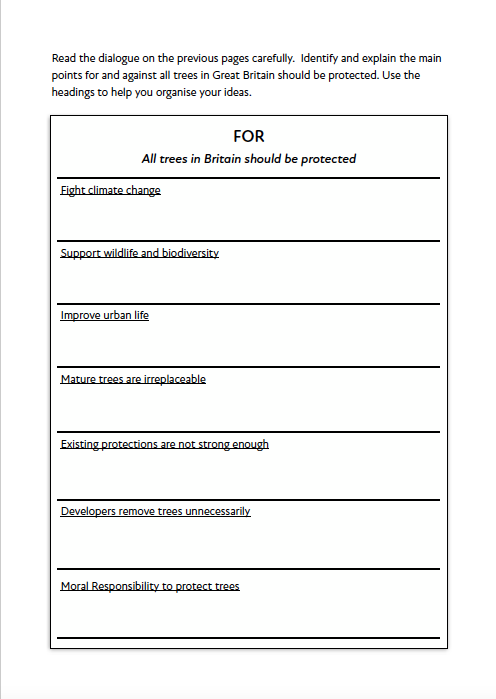 Image 7 of 10
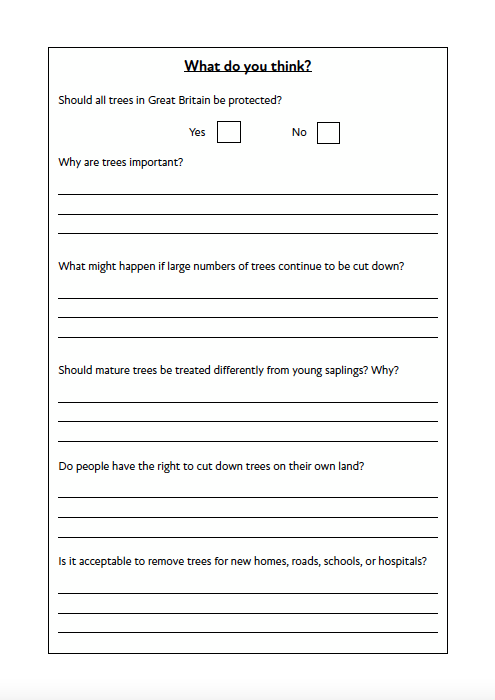 Image 8 of 10
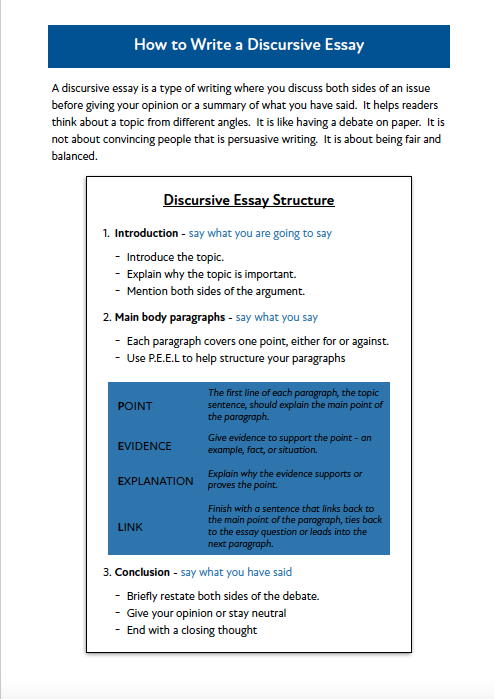 Image 9 of 10
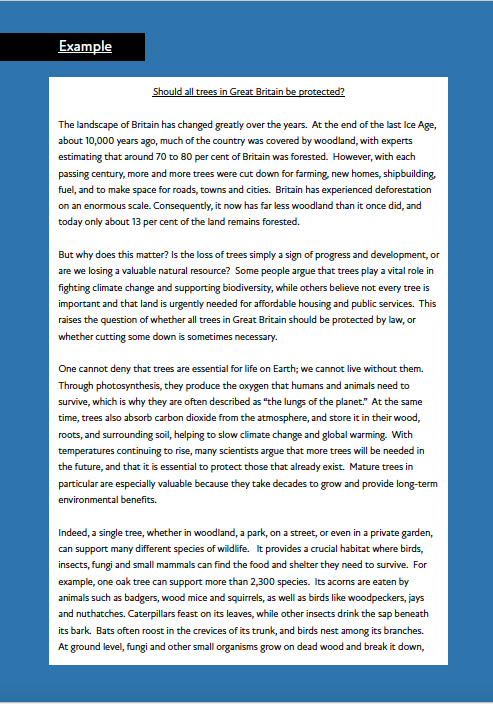 Image 10 of 10